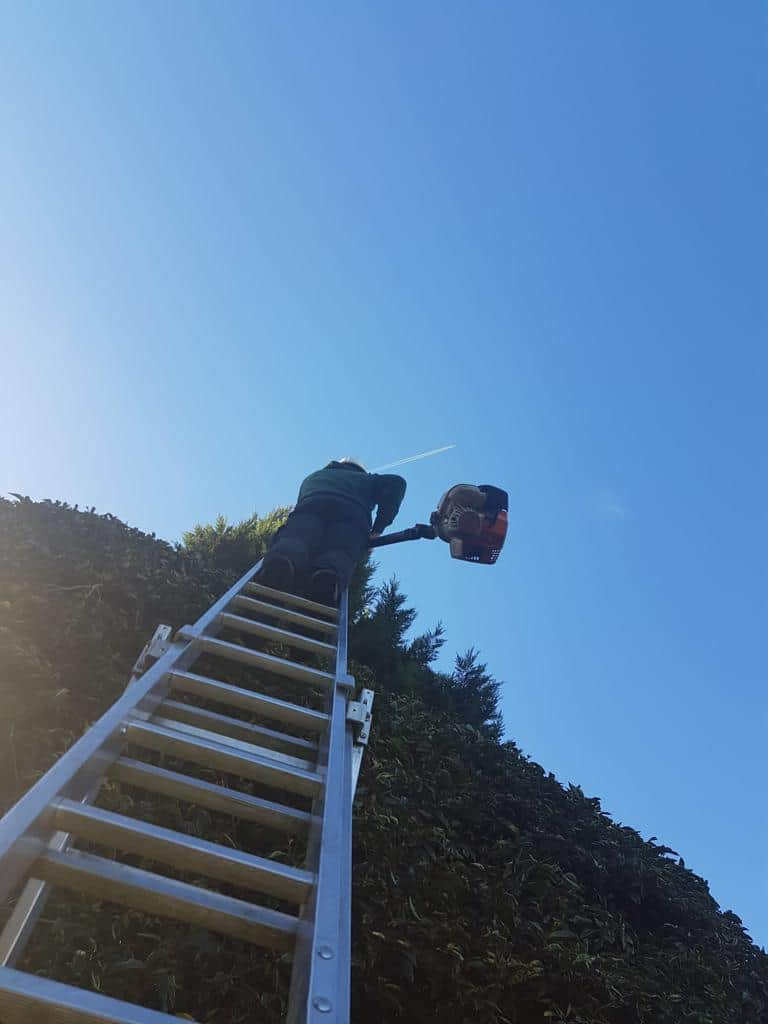
Removing an unwanted tree can completely change the appearance and usability of a garden. More light may reach the surrounding area, previously restricted space becomes available, and the garden can begin to feel more open. Yet once the branches and trunk have gone, many homeowners notice that the area still does not feel completely finished. Often, the remaining tree stump is the reason.
For property owners in Hoddesdon, Hertfordshire, stump grinding can provide the next stage after tree removal when the remaining stump interferes with the appearance, maintenance or future use of the garden. A stump does not always have to be removed simply because the tree has gone, but where it prevents the space from being used as intended, professional grinding can make a considerable practical difference.
Why a Remaining Tree Stump Can Make a Garden Feel Incomplete
Tree felling and stump removal are separate processes. When a tree is felled, the trunk is normally cut close to ground level, but the lower section and root system remain in place.
This may be perfectly acceptable in an unused area. However, where the surrounding garden is being redesigned, landscaped or brought back into regular use, the stump can become a surprisingly significant obstruction.
Tree Removal Does Not Automatically Remove the Stump
It is useful to understand what remains after a tree has been felled.
The visible branches and main trunk can be removed, but the lowest section of the trunk continues into the root system beneath the ground.
Removing this entire underground structure would be very different from ordinary tree felling.
Stump grinding instead focuses on mechanically reducing the remaining stump below the surrounding surface, allowing the area to be managed more effectively afterwards.
The Stump Can Remain the Visual Focus
Before tree removal, attention naturally goes towards the height and spread of the tree.
Once it has gone, the remaining stump can become much more noticeable.
This is particularly true when it sits within an otherwise open lawn, beside a path or in a prominent part of the garden.
Although considerably smaller than the original tree, it can still make the area look as though the removal process has stopped halfway through.
An Old Stump Can Interrupt a Lawn
A stump situated within a lawn can divide an otherwise continuous area of grass.
Mowing has to take place around it, and the surrounding edges can become more difficult to maintain neatly.
The stump may also prevent the area from being levelled or incorporated naturally into the rest of the lawn.
Where the objective is to create a cleaner, more usable grassed area, stump grinding can remove the main obstruction and make subsequent garden work more straightforward.
Garden Maintenance Can Become More Awkward
A remaining stump often affects routine maintenance more than homeowners initially expect.
Mowers and other garden equipment need to be manoeuvred around it, while vegetation can develop around the base where access is more difficult.
This can create a small but persistent maintenance problem.
Grinding the stump can simplify the layout and make the surrounding area easier to manage as part of the wider garden.
The Stump Can Limit Future Landscaping Plans
One of the main reasons homeowners choose stump grinding is that they want to use the space differently.
After a tree has been removed, the newly available area may become part of a broader garden improvement.
An unwanted stump can interfere with these plans by occupying the exact location that needs to be incorporated into the new layout.
Dealing with it early can provide greater flexibility when deciding how the area should be used.
A Small Stump Can Still Be Inconvenient
The size of the stump does not necessarily determine how disruptive it is.
A relatively small stump positioned in the middle of a useful garden area can be more inconvenient than a much larger stump hidden in an unused corner.
Location is therefore just as important as diameter.
When deciding whether stump grinding is worthwhile, the key question is often whether the stump interferes with what you want to do with the surrounding space.
A Stump Near a Path Can Affect the Layout
Where a tree previously grew beside a garden path, the remaining stump may restrict how the path can be maintained or redesigned.
Even if it does not physically block the route, it can limit the usable width of the surrounding area.
Grinding the stump can provide more freedom when reorganising the space.
The required grinding depth and extent should be considered according to what is planned for the area afterwards.
Stumps Can Complicate New Planting
After removing a tree, homeowners sometimes want to introduce new planting into the surrounding area.
A remaining stump can make this more difficult because it continues occupying a significant part of the immediate ground.
Stump grinding can remove the main woody obstruction, although the wider root system will not simply disappear immediately.
Future planting plans should therefore take account of the condition of the ground and the intended use of the space.
Grinding a Stump Is Different From Digging Out Every Root
Stump grinding is sometimes misunderstood as the complete removal of the tree’s entire underground root system.
That is not generally what the process is intended to achieve.
Specialist machinery reduces the stump and accessible portions of the main root flare in the working area. The wider root network can remain underground and naturally change over time.
For many garden projects, removing the main stump is what provides the practical improvement homeowners are looking for.
Stump Grinding Can Reduce the Obstruction Below Surface Level
The advantage of grinding is that the visible stump can be reduced below the surrounding ground level.
This changes the area from one dominated by a solid section of timber into space that can be considered for its next use.
How the area is finished afterwards depends on the intended garden plans.
Professional assessment can take this into account before grinding begins.
The Surrounding Ground May Need Attention Afterwards
Stump grinding addresses the woody obstruction, but the area does not instantly become a finished lawn or planting bed.
Grinding produces material from the stump, and the ground where the tree previously stood may require further preparation depending on its future use.
This is worth considering before work begins.
If the homeowner knows how the area will eventually be used, the stump grinding can be approached with that objective in mind.
Multiple Stumps Can Make a Garden Feel Particularly Fragmented
Some gardens contain several stumps left from trees removed at different times.
Individually, each may seem relatively insignificant.
Together, they can make mowing, landscaping and reorganising the garden much more difficult.
Where access allows, dealing with several unwanted stumps can help create a more continuous and usable area rather than working around multiple permanent obstacles.
Old Stumps Can Become Hidden by Vegetation
A stump that is obvious immediately after tree removal can gradually become surrounded by grass, weeds or other vegetation.
This does not mean the obstruction has disappeared.
Instead, it can become harder to see while continuing to affect how the area is used.
Where an old stump is no longer immediately obvious, its position and dimensions should be identified before surrounding garden work takes place.
A Stump Can Influence How Furniture and Garden Features Are Positioned
Usable garden space is not simply measured by its total dimensions.
The position of fixed obstacles affects how that space can actually be arranged.
A stump may prevent a seating area, planting feature or other garden element from being positioned where it would otherwise work best.
Removing the obstruction can provide greater freedom when planning how the garden should function.
Stump Grinding Can Be Particularly Useful During Garden Improvements
If wider garden work is already planned, it can be sensible to consider unwanted stumps before the surrounding area is completed.
Designing around a stump and then deciding later that it needs removing can create unnecessary complications.
Addressing the obstruction first provides a clearer starting point for subsequent work.
This is particularly useful where the purpose of removing the original tree was to reclaim and improve the space.
Not Every Stump Needs to Be Ground Out
Stump grinding is useful, but it is not automatically necessary after every tree removal.
A stump in an unused area may cause no practical difficulty. Some homeowners may also be perfectly content to leave one where it does not interfere with their plans.
Professional tree services should respond to what the garden actually requires rather than assuming every stump must be removed.
The decision becomes more relevant when the stump is affecting appearance, access, maintenance or future use.
The Intended Use of the Area Matters
Before arranging stump grinding, it is helpful to consider what you want the space to become.
Do you want to incorporate it into a lawn? Is the garden being redesigned? Is the stump preventing easier maintenance? Is it simply an unwanted feature in a prominent location?
These questions help establish why grinding is being considered.
Having a clear objective also allows the work to be planned around the future use of the area rather than treating the stump as an isolated problem.
Access Is an Important Part of Professional Stump Grinding
Stump grinding requires specialist machinery to reach the stump.
The position of the stump within the garden, surrounding features and available access therefore need to be considered before work begins.
A stump in an open area presents different practical circumstances from one located within a restricted section of the garden.
Professional assessment allows these conditions to be understood in advance and an appropriate approach to be planned.
Nearby Features Need to Be Considered
A stump does not exist independently of its surroundings.
Fences, planting, paths and other garden features may be positioned nearby.
The working area should therefore be assessed before grinding takes place.
This is another reason professional stump grinding is more than simply bringing machinery into the garden and reducing visible timber. The location and surroundings form part of determining how the work should be approached.
Stump Grinding Can Complete the Practical Side of Tree Removal
Tree felling solves the problem above ground.
Stump grinding can complete the practical transformation where the remaining base is preventing the area from being properly reused.
The difference can be particularly noticeable when the original purpose of tree removal was to create additional garden space.
Instead of continuing to arrange everything around the position of the former tree, the area can begin to form part of the wider garden again.
Professional Assessment Helps Determine Whether Grinding Is Worthwhile
If you are unsure whether a stump genuinely needs attention, consider how much it affects the garden.
At Hoddesdon Tree Surgeons, we assess unwanted tree stumps in Hoddesdon, Hertfordshire by considering their size, position, accessibility, surrounding features and the intended use of the area.
Where a stump causes no practical problem, grinding should not be recommended simply for the sake of carrying out additional work. Where it prevents landscaping, interrupts a lawn or makes the space more difficult to use, professional stump grinding can provide a practical next step after tree removal.
Conclusion
Removing a tree can dramatically improve a garden, but the remaining stump can sometimes prevent the area from feeling completely finished. It may interrupt a lawn, make maintenance more awkward, restrict future planting or landscaping, or simply remain as an unwanted visual reminder of the tree that previously occupied the space.
Stump grinding does not mean removing every underground root. Instead, it deals with the main remaining woody obstruction so that the area can be used and managed more effectively.
If a tree has already been removed but the remaining stump is preventing you from making full use of your garden in Hoddesdon, Hertfordshire, contact Hoddesdon Tree Surgeons. We can assess the stump, its surroundings and accessibility and recommend an appropriate approach based on how you want to use the area afterwards.
Call us on: 01992 932 599
Click here to find out more about Hoddesdon Tree Surgeons
Click here to complete our contact form and see how we can help with your tree care needs.